Farmer safety awareness drive reaches 23 villages across Kalahandi
Bhubaneswar (Odisha Tazanews) :- Strong Rural Communities are built on the well-being and resilience of their farmers. Recognising this, Vedanta Aluminium, India’s largest producer of aluminium, has reinforced its commitment through Project SANGAM implemented by Action for Food Production (AFPRO), conducted 23 training and awareness programmes across 23 villages in Odisha’s Kalahandi district, equipping more than 400 farmers with knowledge on safe agrochemical handling and sustainable agricultural practices.
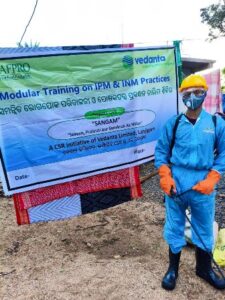

The programmes focused on the safe handling, storage, transportation and disposal of highly hazardous fertilisers and pesticides, while promoting the correct use of Personal Protective Equipment (PPE) to reduce occupational health risks and encourage environmentally responsible farming practices. Project SANGAM, Vedanta Aluminium’s watershed and livelihood development programme in Kalahandi, supports farming communities through initiatives aimed at improving water security, agricultural productivity, and livelihoods. As part of the programme, farmers were trained in safe agrochemical use, scientific application techniques and emergency response measures.
The sessions also included practical demonstrations on the correct use of PPE, with protective kits distributed to selected Farmers’ Field School (FFS) members to encourage safer practices in the field. Speaking on the initiative, Pranab Kumar Bhattacharyya, CEO, Vedanta Alumina Business, Lanjigarh, said, “At Vedanta, we believe that the well-being of farmers is fundamental to building resilient and prosperous rural communities.
Through Project SANGAM, we are empowering farmers with the knowledge and tools needed to adopt safer, healthierand more sustainable agricultural practices. By promoting responsible agrochemical management and improving awareness of occupational safety, we are contributing to enhanced productivity, environmental protection, and long-term agricultural sustainability.”
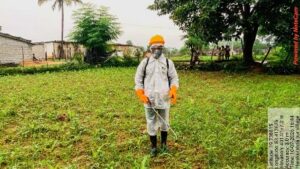

Sharing his experience, Siba Majhi, a farmer from Goipita village, said, “The training helped us understand the risks associated with pesticides and fertilisers and the importance of using protective equipment while working in the fields. The practical demonstrations made it easy to learn safe handling methods, and I am now more confident about protecting my health while improving my farming practices.”
To date, Project SANGAM has positively impacted over 9,000 beneficiaries across 41 villages, creating lasting value through improved agricultural practices, enhanced livelihoods and stronger community resilience. The project has also developed more than 70 water conservation structures, including community and farm ponds,
creating groundwater recharge potential of approximately 18 lakh cubic metres and enabling irrigation for over 1,700 acres of farmland. In addition, the initiative is strengthening rural livelihoods through support for poultry and goat rearing, as well as micro-enterprise development programmes for youth, marginalised communities, and landless farmers, fostering sustainable economic growth across the region.